
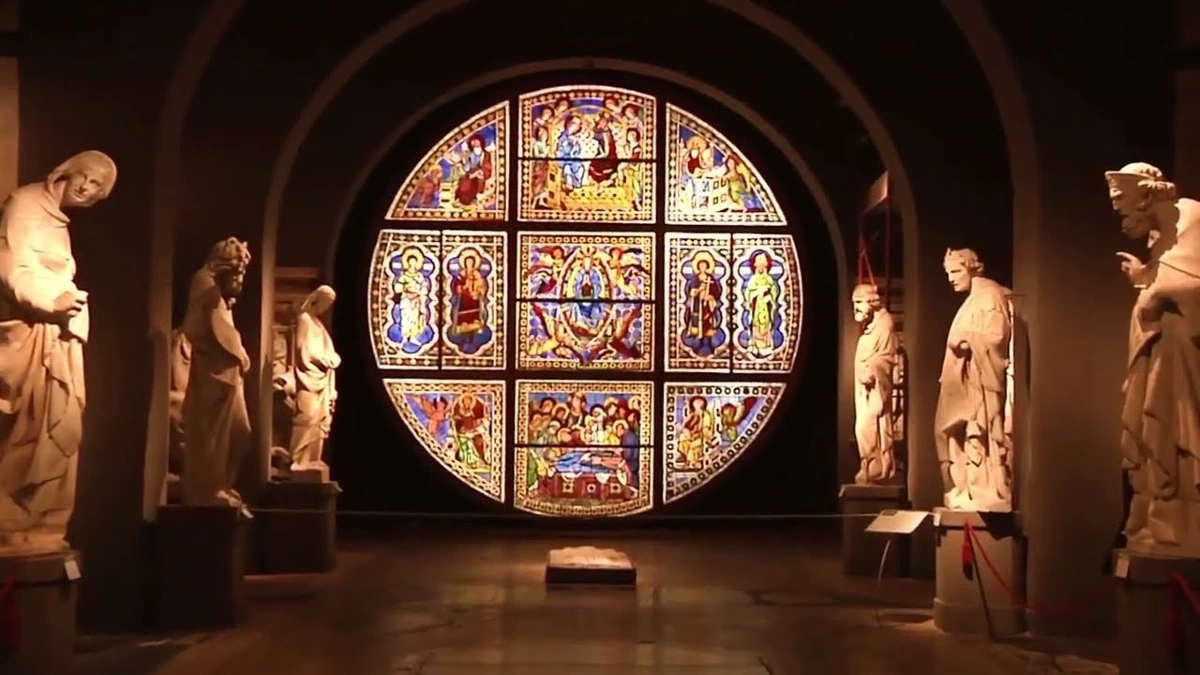
The Opera Duomo Museum is where many of Siena Cathedral’s key artworks are displayed once they’re no longer kept in the main church. The museum is a good stop if you want to see the Cathedral first and then understand what you were looking at.
It also pairs well with the panorama/viewpoint route (in which you see the whole city from the top), so it fits naturally if you’re planning a longer visit to the Duomo complex.
This article shows you what to see inside the Opera Duomo Museum, and how to fit it into your Duomo complex visit.
Haven’t bought your tickets yet? Check out the skip-the-line options.
Why visit the Opera Duomo Museum?
1) You’ll see key Cathedral works in a better viewing setup
Inside the Cathedral, it’s not always easy to stop, step back, and really look, especially when the flow of visitors keeps moving. In the museum, you can slow down, read the labels, and see important pieces at a comfortable distance, which makes a big difference if you care about details.
2) Duccio’s Maestà is the main reason many people visit the museum
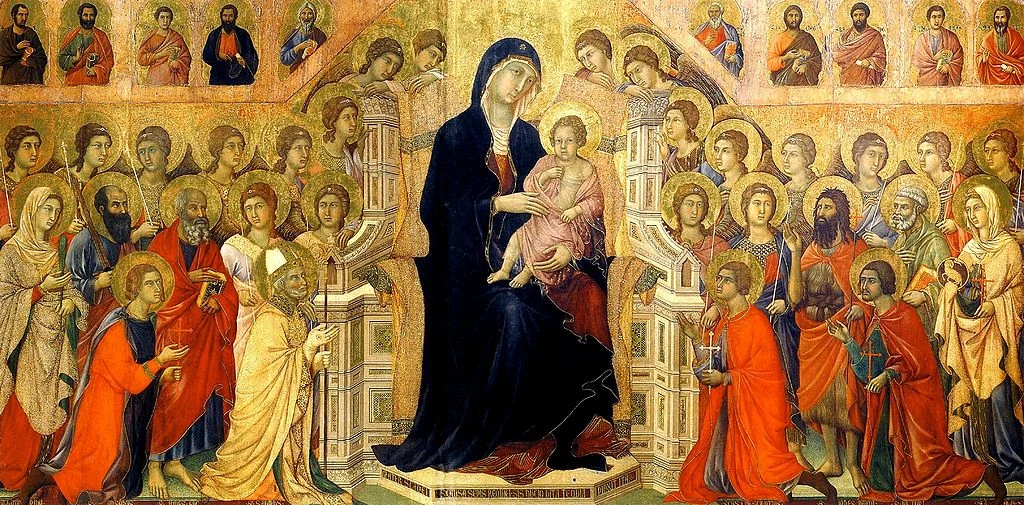
Duccio di Buoninsegna’s Maestà was created for the Cathedral’s high altar, and today it’s one of the museum’s central works. Even if you don’t usually spend long in museums, this is the piece that often changes the visit from “nice” to “I’m glad I came in here.”
3) It gives you a clear sense of Sienese art across centuries
The collection spans a long period from the 13th to the 18th century, so you can see how Siena’s style develops over time, rather than looking at a single isolated room. You’ll also come across names many visitors recognise, like Duccio,Donatello,Jacopo della Quercia, and Giovanni Pisano, which helps you place what you’re seeing in a bigger context.
4) You’d better understand the Cathedral ‘s facade
On the ground floor (in the facade sculpture room), you’ll see groups of statues linked to the Cathedral’s facade program, including figures like Prophets, Sibyls, and Philosophers. If you’ve looked at the Cathedral from the outside and wondered what you’re meant to notice, this section provides the missing context without a guided tour.
5) It’s not only paintings- there are objects tied to how the Duomo functioned
The museum also preserves smaller pieces connected to the Cathedral’s life over time, such as archaeological fragments, textiles, goldsmith work, and illuminated manuscripts. These rooms are useful if you like the “how it all worked” side of historic sites, not just the headline artworks.
Want to know when to visit? Check: opening hours
Key highlights inside the museum
The Siena Cathedral Museum, also known as the Museo dell’Opera, houses a remarkable collection of artworks that were once part of the Cathedral or other buildings in the complex. Here’s a floor-by-floor summary of what’s on display:
Ground floor (facade sculptures + key works)
Start here if you want the “Cathedral exterior context” first. The ground floor displays a group of 14th-century statues that were originally part of the Cathedral’s facade program. You’ll see figures such as Sibyls, Prophets, and Philosophers of Antiquity, and this is where names like Giovanni Pisano come up often in explanations.
This floor also includes major 15th-century works that many visitors come looking for, including Jacopo della Quercia’s Madonna and Child Enthroned with Cardinal Casini and Donatello’s Madonna and Child, widely known as the Madonna del Perdono.
Before you move upstairs, look for Duccio di Buoninsegna’s stained-glass rose window (late 1200s). Seeing it in the museum helps you understand what’s original, and why some features associated with the Cathedral are now displayed here.
First floor (Duccio’s Maestà + a few key rooms)
This is the floor that many people build their museum visit around because it includes Duccio’s Maestà Altarpiece. It’s displayed so you can understand it as a double-sided work: the front shows the Madonna and Child Enthroned with Angels and Saints, and the reverse presents the Story of the Passion.
In the same area, you’ll also find Pietro Lorenzetti’s Nativity of the Virgin, originally made for an altar inside Siena Cathedral. If you’re only reading labels for a couple of pieces, these are usually the ones worth prioritising.
Adjacent rooms often include wooden sculptures and illuminated manuscripts. Some visitors skim them, but if you like Siena’s workshop tradition, these rooms help you see the craft side of the Cathedral’s history. Your highlights list can include works such as the Mourners by Domenico di Niccolò dei Cori, Madonna and Saints by Jacopo della Quercia, and manuscript codices associated with artists such as Lippo Vanni, Sano di Pietro, and Benvenuto di Giovanni.
Top floor (later paintings + Tapestry Room)
The top floor features religious paintings from roughly the 13th to the 19th centuries, including works on wood and canvas. Commonly highlighted pieces include the Madonna of the Large Eyes (Master of Tressa), the Madonna of Humility and Saints (Gregorio di Cecco), and St. Bernardino Preaching (Sano di Pietro).
One room people tend to remember is the Tapestry Room. It includes 17th-century wall hangings and 19th-century painted models for facade elements (cusps), associated with Luigi Mussini and Alessandro Franchi. You’ll also see textiles from the Cathedral, including the Casula in Lucca jasper vestment.
Tip: If you’re short on time, most visitors prioritise the Maestà floor first, then pick either the facade sculptures or the tapestry/textile rooms based on interest.
Before you visit, it helps to know what’s inside the Cathedral vs what’s in the museum: what to see
How long to spend here
A simple way to plan it:
- 45-60 minutes if you want the main highlights (Maestà + key rooms)
- 60-90 minutes if you also want the sculpture sections and a slower museum time
- Longer if you like reading labels, manuscripts, and textile rooms
If you’re combining the Museum + viewpoint and other sites, you’ll need two to three hours to see everything. However, be aware that the OPA SI PASS is valid for three consecutive days.
Need help planning the overall complex route? Read Tips for visiting Siena Cathedral
Tickets: Does the museum need the OPA SI Pass?
The Opera Duomo Museum is treated as part of the Duomo complex sites, not the basic Cathedral-only route. If your plan includes the Museum (plus places like the Crypt, Baptistery, and viewpoints), the OPA SI PASS is the ticket format that usually covers those stops.
Before you book, check your ticket inclusions so you don’t arrive expecting museum access on a Cathedral-only ticket.
Ready to choose? Siena Cathedral tickets
How to combine it with the rest of the Duomo complex
If you’re doing multiple sites, a practical flow many visitors use is:
Cathedral + Library, Crypt, Museum, viewpoint, and Baptistery
That order keeps you from bouncing back and forth across the complex entrances.
Frequently Asked Questions
Here are the questions visitors ask most often about the Opera Duomo Museum.
Is the Opera Duomo Museum inside the Cathedral?
No, it’s a separate stop in the Duomo complex. You’ll visit it as its own site, not as part of the Cathedral route.
What’s the one artwork I shouldn’t miss here?
Duccio’s Maestà is the headline piece for most visitors. If you only have time for one “slow look,” make it that.
Is the Museum worth it if I’m not a museum person?
Yes, if you want two things: the Maestà, and a clearer understanding of the Cathedral’s artworks and facade program.
Can I do the Museum quickly and still get value?
Yes. Even 45 minutes is enough for the Maestà and a focused loop through the key rooms, just don’t try to see every label.
Does the Museum help with views/panorama planning?
Often yes, because many visitors pair the Museum with the viewpoint portion of the complex on the same ticket and in the same time block.
recommended reading